
Healthcare in the United States is expensive. For students, managing these costs can be challenging, especially when living on a tight budget.
Whether you are a college student, international student, or part-time learner, having health insurance is essential. One unexpected medical bill can quickly become a financial burden.
The good news? There are several cheap health insurance options for students that provide solid coverage without draining your budget.
In this detailed guide, you’ll learn how to find affordable student health insurance, compare plans, reduce costs, and choose the best option for your needs.
Why Students Need Health Insurance
Many students think they are young and healthy, so they don’t need insurance. This is risky.
Here’s why insurance is important:
- Emergency room visits can cost thousands of dollars
- Minor treatments can still be expensive
- Universities often require proof of insurance
- Preventive care keeps you healthy long-term
Even a simple injury can lead to major expenses.
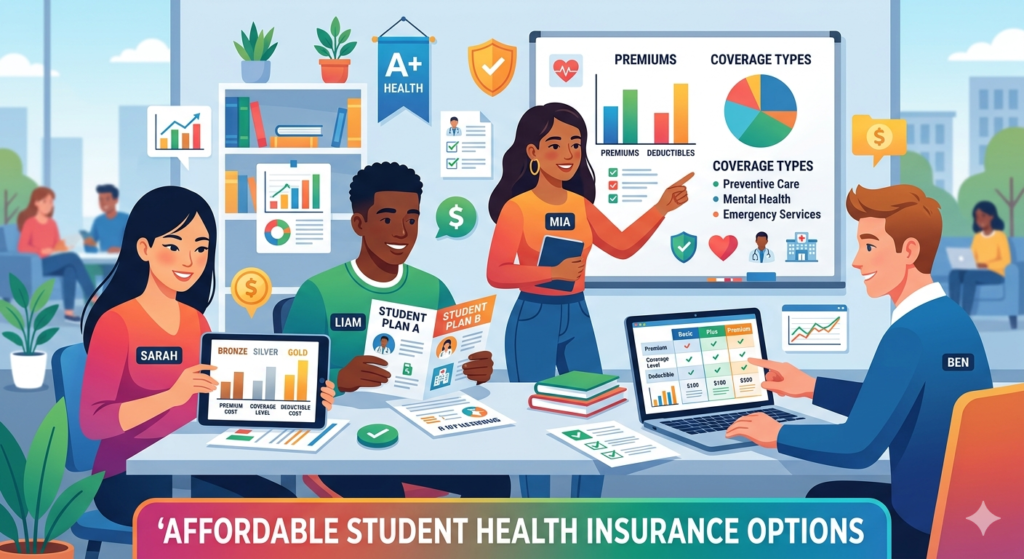
Who Qualifies as a Student for Health Insurance?
You may qualify if you are:
- A full-time college or university student
- A part-time student (in some cases)
- An international student studying in the USA
- A graduate or postgraduate student
Different plans have different eligibility criteria.
Types of Cheap Health Insurance for Students
There is no one-size-fits-all solution. Let’s explore your options.
1. Student Health Insurance Plans (University-Sponsored)
Most universities offer their own health insurance plans.
Benefits:
- Tailored for students
- Affordable compared to private plans
- Easy enrollment
Drawbacks:
- Limited provider networks
- May not cover off-campus care
Best for: Full-time students who want simple and reliable coverage.
2. ACA Marketplace Plans (HealthCare.gov)
These are government-supported plans available to students.
Key advantages:
- Income-based subsidies
- Essential health benefits included
- Wide range of plans
Plan categories:
- Bronze (lowest monthly premium)
- Silver (best balance)
- Gold (higher premium, lower costs)
Best for: Students with low income who qualify for financial assistance.
3. Medicaid (Free or Low-Cost Coverage)
Medicaid is one of the cheapest options available.
Eligibility depends on:
- Income level
- State requirements
Benefits:
- Very low or no monthly premium
- Comprehensive coverage
Best for: Low-income students.
4. Parent’s Health Insurance Plan
Students under age 26 can stay on their parent’s plan.
Pros:
- Often cheaper than buying your own
- Comprehensive coverage
Cons:
- Limited network if studying far from home
5. Short-Term Health Insurance
Temporary coverage option.
Features:
- Lower premiums
- Limited benefits
Important:
Does not cover pre-existing conditions.
Best for: Students between plans or needing temporary coverage.
6. International Student Insurance Plans
Special plans designed for students studying abroad.
Key features:
- Meets visa requirements
- Covers emergency and basic care
Best for: Non-U.S. students.
How Much Does Student Health Insurance Cost?
Costs vary depending on coverage and eligibility.
Average monthly costs:
- University plans: $100 – $300
- ACA plans (after subsidies): $0 – $200
- Private plans: $150 – $400
- Medicaid: Free or very low cost
Factors That Affect Cost
Several factors influence pricing:
- Age
- Location
- Income
- Coverage level
- Type of plan
Students with lower income usually pay less due to subsidies.
How to Find Cheap Health Insurance for Students
Finding the right plan requires research.
Step-by-step process:
1. Check Your University Plan
Start with your school’s offering.
2. Visit HealthCare.gov
Compare subsidized plans.
3. Check Medicaid Eligibility
You may qualify for free coverage.
4. Compare Private Plans
Use comparison tools for best rates.
5. Evaluate Coverage vs Cost
Don’t just pick the cheapest plan.
Tips to Save Money on Student Health Insurance
1. Choose a High Deductible Plan
Lower premiums but higher out-of-pocket costs.
2. Use Preventive Services
Most plans cover these for free.
3. Stay In-Network
Avoid extra charges.
4. Apply for Subsidies
Many students qualify.
5. Share Family Plans
If eligible, stay on parent’s insurance.
What Does Student Health Insurance Cover?
Most plans include:
- Doctor visits
- Emergency services
- Hospital stays
- Prescription drugs
- Mental health services
- Preventive care
Coverage depends on the plan.
Common Mistakes Students Make
Avoid these errors:
- Choosing the cheapest plan without checking benefits
- Ignoring deductibles and copays
- Missing enrollment deadlines
- Not understanding coverage limits
Best Health Insurance Providers for Students
Popular providers include:
- Blue Cross Blue Shield
- UnitedHealthcare StudentResources
- Aetna Student Health
- Cigna
- Kaiser Permanente
Each offers different plans and pricing.
International Students: What You Need to Know
If you’re studying in the U.S.:
- Insurance is often mandatory
- Plans must meet visa requirements
- University plans are usually the easiest option
When to Enroll in Student Health Insurance
Open Enrollment Period:
Typically November to January.
Special Enrollment:
Triggered by:
- Moving to a new state
- Losing other coverage
- Changes in income
Cheap vs Best: What Should You Choose?
Cheapest isn’t always best.
Balance these factors:
- Monthly premium
- Deductible
- Coverage benefits
- Network providers
Future Trends in Student Health Insurance
Emerging trends:
- Telehealth services
- Digital health platforms
- Personalized plans
- AI-driven healthcare tools
Conclusion
Finding cheap health insurance for students doesn’t have to be difficult.
With options like Medicaid, ACA marketplace plans, university coverage, and family insurance, students have multiple affordable choices.
The key is to compare plans carefully, understand your needs, and take advantage of available subsidies.
Health insurance is not just an expense — it’s an investment in your future.
3. FAQs (Featured Snippet Optimized)
1. What is the cheapest health insurance for students?
Medicaid is usually the cheapest option, often free for eligible low-income students.
2. Can students get free health insurance in the USA?
Yes, students with low income may qualify for Medicaid, which can be free or very low cost.
3. Is student health insurance mandatory?
Some universities require it, especially for international students.
4. Can I stay on my parents’ health insurance as a student?
Yes, you can stay on your parent’s plan until age 26.
5. Are ACA plans good for students?
Yes, ACA plans are affordable and offer subsidies based on income.
Disclaimer: The information provided in this article titled ‘cheap health insurance for students’ is for educational and informational purposes only. While we strive for accuracy and reliability, we recommend verifying details from official sources or professionals before making decisions.
Also read about,