
Working part-time has become increasingly common in the United States. Whether you’re a student, freelancer, gig worker, or balancing multiple jobs, part-time work offers flexibility.
But there’s one major challenge: health insurance.
Unlike full-time employees, part-time workers often do not receive employer-sponsored health benefits. This leaves many people wondering:
How can part-time workers get affordable health insurance?
The good news is that several options exist—from government programmes to private plans.
In this complete guide, you’ll learn everything about health insurance for part-time workers, including coverage options, costs, eligibility, and smart ways to save money.
Who is Considered a Part-Time Worker?
A part-time worker typically works fewer hours than a full-time employee.
General definition:
- Less than 30–35 hours per week
- Not eligible for full-time benefits (in most companies)
This includes:
- Retail and service workers
- Gig workers (Uber, DoorDash, etc.)
- Students with part-time jobs
- Freelancers with limited hours
Do Part-Time Workers Get Health Insurance from Employers?
Sometimes — but not always.
Under the Affordable Care Act (ACA):
- Employers with 50+ full-time employees must offer insurance
- Only applies to employees working 30+ hours/week
Important:
Part-time workers are usually not guaranteed employer coverage.
However, some companies voluntarily offer benefits.
Examples:
- Starbucks
- Costco
- Amazon (some roles)
These companies may provide partial benefits to part-time staff.
Why Health Insurance is Important for Part-Time Workers
Even if you work fewer hours, health risks remain the same.
Key reasons to have coverage:
- Protect against high medical bills
- Access preventive care
- Avoid financial stress
- Get timely medical treatment
A single emergency can cost thousands of dollars without insurance.
Best Health Insurance Options for Part-Time Workers
Let’s explore the most practical and affordable options.
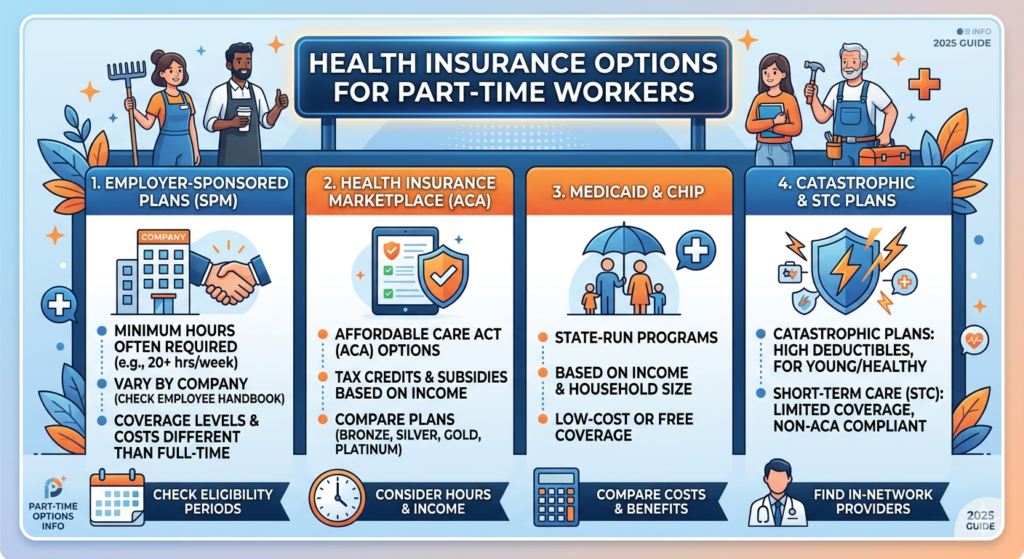
1. ACA Marketplace Plans (HealthCare.gov)
This is the most popular option.
Benefits:
- Income-based subsidies
- Comprehensive coverage
- Covers essential health benefits
Plan tiers:
- Bronze (low premium, high deductible)
- Silver (balanced)
- Gold (higher premium, lower costs)
Best for: Workers with low to moderate income.
2. Medicaid (Free or Low-Cost Insurance)
Medicaid is the cheapest option available.
Eligibility depends on:
- Income
- Household size
- State rules
Benefits:
- Free or very low premiums
- Covers essential services
Best for: Low-income part-time workers.
3. Employer-Sponsored Plans (If Available)
Some companies offer benefits to part-time employees.
Pros:
- Lower cost (shared with employer)
- Easy enrollment
Cons:
- Limited availability
- May require minimum hours
4. Short-Term Health Insurance
Temporary coverage option.
Features:
- Lower monthly cost
- Limited coverage
- Not ACA-compliant
Best for: Transitional periods.
5. Parent’s Health Insurance Plan
If under 26, you can stay on your parent’s plan.
Benefits:
- Comprehensive coverage
- Often cheaper
6. Private Health Insurance
Purchased directly from insurers.
Pros:
- Flexible plans
- Wide provider networks
Cons:
- No subsidies
- Higher cost
How Much Does Health Insurance Cost for Part-Time Workers?
Costs vary based on income and plan type.
Average monthly costs:
- ACA plans (after subsidies): $0 – $200
- Private insurance: $200 – $500
- Medicaid: Free or low-cost
Factors That Affect Cost
Several variables influence pricing:
- Age
- Location
- Income level
- Plan type
- Coverage level
Lower-income workers often qualify for reduced costs.
How to Get Affordable Health Insurance
Finding affordable coverage requires strategy.
Step-by-step guide:
1. Check Medicaid Eligibility
Start with free options.
2. Visit healthcare.gov.
Compare subsidised plans.
3. Review Employer Options
Ask your employer about benefits.
4. Compare Private Plans
Look for competitive pricing.
5. Choose Based on Needs
Don’t just pick the cheapest plan.
Tips to Save Money on Health Insurance
1. Use Subsidies
ACA plans offer significant savings.
2. Choose High Deductible Plans
Lower monthly premiums.
3. Stay In-Network
Avoid unnecessary charges.
4. Use Preventive Services
Often covered at no cost.
5. Review Plans Annually
Prices change every year.
What Does Health Insurance Cover?
Most ACA-compliant plans include:
- Doctor visits
- Emergency care
- Hospitalization
- Prescription drugs
- Mental health services
- Preventive care
Coverage varies by plan.
Common Mistakes to Avoid
Avoid these errors:
- Skipping insurance to save money
- Choosing plans without checking coverage
- Ignoring deductibles
- Missing enrollment deadlines
Open Enrollment and Special Enrollment
Open Enrolment:
Usually November to January.
Special Enrolment:
Triggered by:
- Job changes
- Income changes
- Loss of coverage
Part-Time Workers vs Freelancers: Key Differences
Part-Time Workers:
- May have employer options
- More stable income
Freelancers:
- Fully responsible for insurance
- Income may fluctuate
Is Health Insurance Mandatory?
There is no federal penalty for not having insurance.
However:
- Some states require coverage
- Medical costs can be extremely high
Future Trends in Part-Time Worker Health Insurance
Emerging trends:
- Gig worker benefits expansion
- Digital health platforms
- Telemedicine services
- Flexible insurance plans
Conclusion
Finding the right health insurance for part-time workers is essential for financial protection and peace of mind.
While employer-sponsored coverage may be limited, options like ACA marketplace plans, Medicaid, and private insurance make coverage accessible.
The key is to:
- Understand your eligibility
- Compare plans carefully
- Take advantage of subsidies
Your health matters — no matter how many hours you work.
3. FAQs (Featured Snippet Optimized)
1. Can part-time workers get health insurance in the USA?
Yes, through ACA marketplace plans, Medicaid, private insurance, or employer options (if available).
2. What is the cheapest health insurance for part-time workers?
Medicaid is usually the cheapest option, often free for eligible individuals.
3. Do employers have to provide insurance to part-time workers?
Most employers are not required to offer health insurance to part-time employees.
4. Can part-time workers obtain ACA subsidies?
Yes, if their income meets eligibility requirements.
5. Is private health insurance worth it for part-time workers?
It can be, especially if you don’t qualify for subsidies or Medicaid.
Disclaimer: The information provided in this article titled ‘health insurance for part-time workers’ is for educational and informational purposes only. While we strive for accuracy and reliability, we recommend verifying details from official sources or professionals before making decisions.
Also read about the,